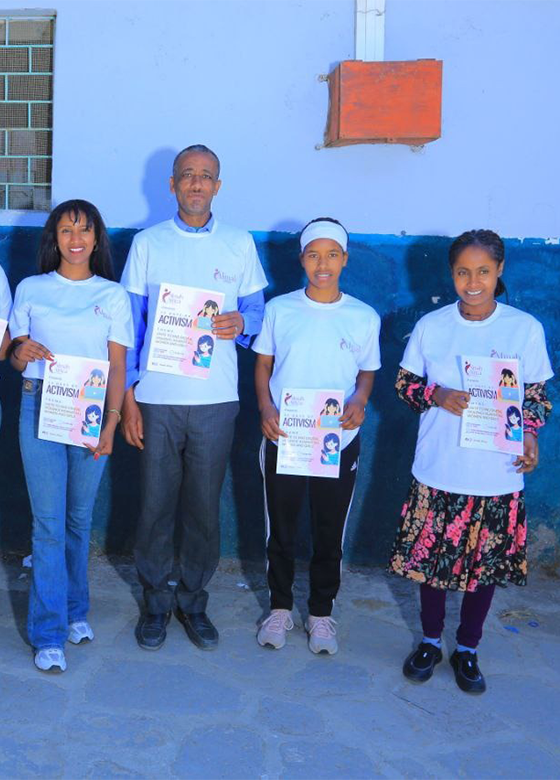
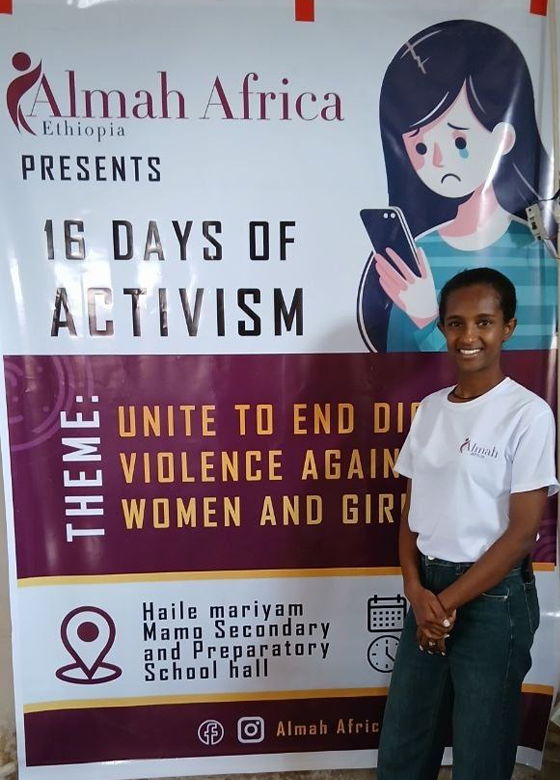
Promoting Safety, Dignity, and Wellbeing
Gender-based violence remains a major barrier to equality, safety, and opportunity. Almah Africa is dedicated to preventing violence, supporting survivors, and promoting a culture of respect and dignity.
We work at both community and systems levels to create safe environments where women and girls can thrive.


We implement comprehensive interventions that address both immediate needs and long-term change:
Gender-based violence affects one in three African women and is a fundamental violation of human rights. It takes many forms: physical and sexual violence in homes, schools, workplaces, and communities. Child marriage and female genital mutilation. Conflict-related sexual violence in war zones. Economic violence that traps women in abusive situations. Technology-facilitated abuse and online harassment. School-related gender-based violence that drives girls out of education.
GBV doesn't happen in isolation. It thrives where girls lack education and don't know their rights. Where women are excluded from decision-making and peace processes. Where economic dependence limits women's options. Where justice systems are inaccessible or discriminatory. Where communities tolerate violence as normal.


Ending GBV requires more than crisis response. It requires transforming the systems that enable violence. GBV prevention and support is woven throughout all our work.


Creating safe schools free from violence. Teaching girls about their rights and bodily autonomy. Engaging teachers and communities in prevention. Providing pathways out of child marriage through education. Building girls' confidence and agency.
Digital safety training to prevent online harassment. Technology for documenting violence and accessing support. Connecting survivors to legal and psychosocial services via mobile platforms. Using data to understand and prevent violence patterns. Amplifying survivors' voices safely online.
Addressing conflict-related sexual violence. Supporting survivors' participation in transitional justice. Training community leaders in GBV prevention. Creating safe spaces for women in conflict zones. Economic empowerment as violence prevention.
 Linking survivors to comprehensive services—legal, medical, psychosocial. Supporting survivor-led organizations and movements. Advocacy for survivor-centered justice systems. Economic empowerment programs for survivors. Leadership development for survivors to become advocates.
Community dialogues on harmful norms and practices. Engaging men and boys as allies and change agents. Advocacy for laws and policies that protect women. Economic alternatives that reduce vulnerability. Shifting power dynamics through education and participation.
Our integrated approach recognizes essential connections. An educated girl is less vulnerable to violence and better able to claim her rights. A woman with economic options can leave violent situations. Technology can both enable abuse and empower survivors. Peaceful communities are safer for women. Survivors with support become powerful advocates.
We measure success not just in services provided, but in decreased tolerance for violence in communities. Increased reporting and help-seeking by survivors. Girls staying in school and delaying marriage. Women participating in decision-making. Survivors rebuilding their lives with dignity. Systems changing to prevent violence before it happens.


We envision an Africa where every woman and girl lives free from violence. Where survivors are believed, supported, and see justice. Where communities refuse to tolerate abuse. Where systems protect rather than perpetuate harm. Where violence prevention is everyone's responsibility.
We don't just respond to violence—we build a future where it no longer thrives.


Support efforts to create safer communities where dignity, respect, and wellbeing are protected for all.